
Architecture of e-Governance in Hindi
Table of Contents
- Architecture of e-Governance in Hindi
- Components of e-Governance Architecture in Hindi
- Design and Framework of e-Governance Architecture in Hindi
Architecture of e-Governance in Hindi
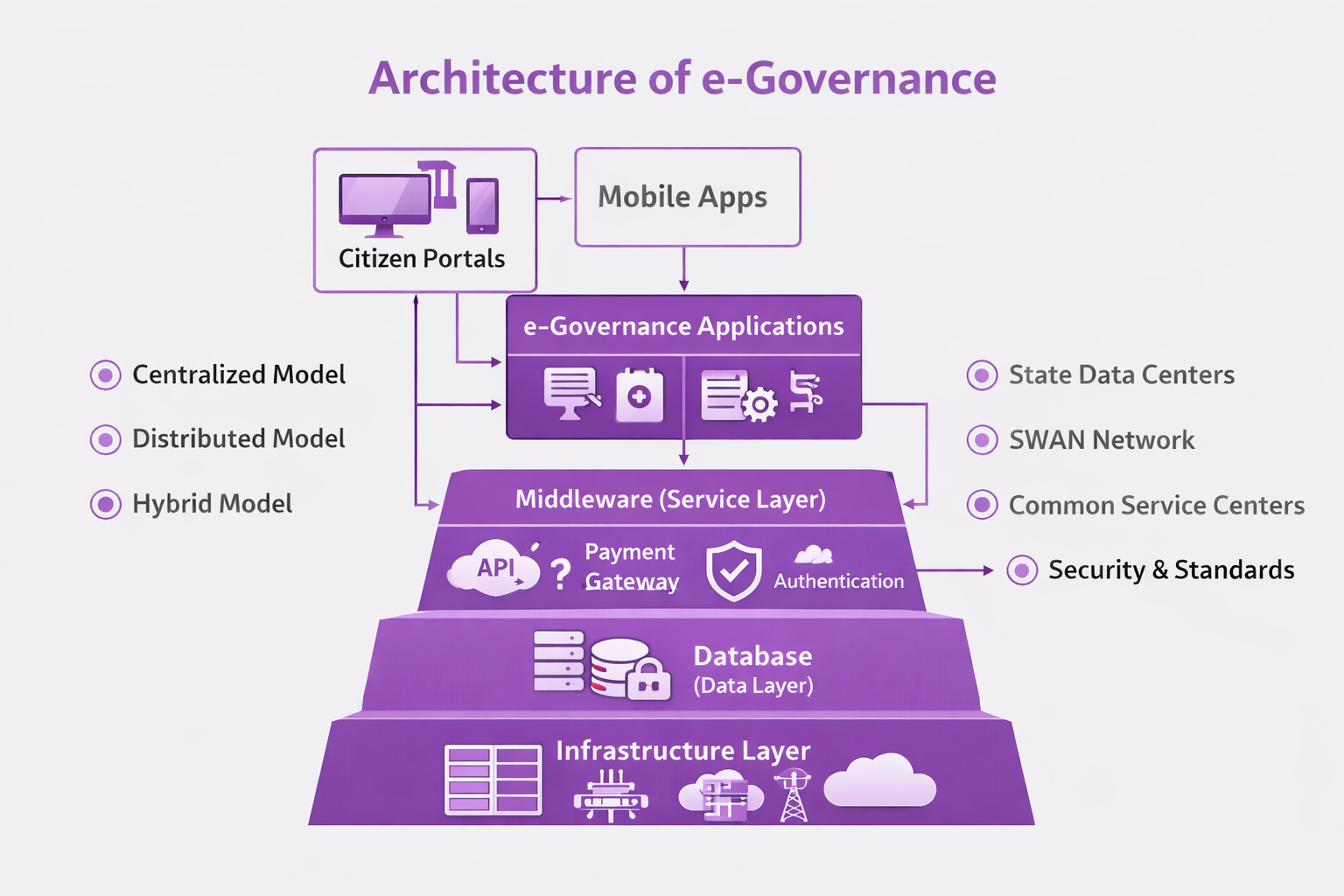
Architecture of e-Governance एक ऐसा structured framework होता है जो यह तय करता है कि Government अपनी services को electronic माध्यम से citizen तक कैसे पहुँचाएगी। इसमें technology, software, hardware, network, data और process सभी एक fixed structure में जुड़े होते हैं। सरल भाषा में कहें तो e-Governance architecture एक नक्शा होता है जिसके आधार पर पूरा digital governance system काम करता है। Exam में यह topic इसलिए important है क्योंकि यह theoretical concept होने के साथ-साथ practical implementation को भी explain करता है।
जब Government कोई online service शुरू करती है, जैसे online certificate, tax payment या scholarship portal, तो उसके पीछे एक मजबूत architecture होता है। अगर architecture सही नहीं होगा तो system slow होगा, data secure नहीं रहेगा और user को परेशानी होगी। इसलिए Architecture of e-Governance को governance का backbone भी कहा जाता है।
Meaning of e-Governance Architecture
e-Governance Architecture का अर्थ है वह complete design और structure जिसके माध्यम से Government और citizen के बीच digital interaction होता है। इसमें यह define किया जाता है कि कौन सा component किस component से जुड़ेगा, data कैसे flow करेगा और service कैसे deliver होगी। Architecture यह भी तय करता है कि system centralized होगा या distributed।
Architecture सिर्फ technical diagram नहीं होती, बल्कि इसमें policy, standards और security rules भी शामिल होते हैं। यही कारण है कि exam में architecture को सिर्फ definition से नहीं, बल्कि explanation के साथ पूछा जाता है। एक अच्छा answer वही माना जाता है जिसमें layers, components और flow को clearly बताया गया हो।
Objectives of e-Governance Architecture

e-Governance architecture को design करने के पीछे कुछ specific objectives होते हैं। ये objectives system को effective, reliable और citizen-friendly बनाते हैं। Government इन्हीं objectives को ध्यान में रखकर architecture तैयार करती है।
- Government services को digital और easily accessible बनाना
- Different departments के बीच coordination और integration करना
- Transparency और accountability को improve करना
- Service delivery में time और cost को reduce करना
- Citizen का trust Government systems पर बढ़ाना
अगर architecture इन objectives को पूरा नहीं करती, तो e-Governance system long term में successful नहीं हो पाता। इसलिए objectives को समझना exam point of view से बहुत जरूरी है।
Layers of e-Governance Architecture
Architecture of e-Governance in Hindi
Architecture of e-Governance को generally layered structure में समझाया जाता है। हर layer का अपना अलग role होता है और सभी layers मिलकर complete system बनाती हैं। नीचे दी गई layers exam में सबसे ज्यादा पूछी जाती हैं।
1. Presentation Layer
Presentation Layer वह layer होती है जिससे citizen या user directly interact करता है। इसमें government websites, mobile applications, kiosks और portals शामिल होते हैं। यही layer user interface provide करती है।
इस layer का main focus usability और accessibility पर होता है। इसका design ऐसा होना चाहिए कि कोई भी citizen बिना technical knowledge के services use कर सके। अगर presentation layer complicated होगी तो citizen services का use नहीं करेगा।
- Web Portals
- Mobile Apps
- Touch Screen Kiosks
2. Application Layer
Application Layer में actual e-Governance applications काम करती हैं। जैसे online land records, birth certificate system, tax management system और e-procurement platforms। यही layer user request को process करती है।
यह layer business logic को handle करती है और decide करती है कि user की request valid है या नहीं। Application layer Government rules और policies के अनुसार data process करती है।
- Departmental Applications
- Workflow Management
- Rule Engine
3. Service Layer (Middleware)
Service Layer को middleware भी कहा जाता है। यह layer different applications के बीच communication establish करती है। इसका काम common services provide करना होता है ताकि हर application को अलग-अलग service ना बनानी पड़े।
Service layer architecture को flexible और scalable बनाती है। अगर future में कोई नई application add करनी हो, तो service layer की मदद से आसानी से integrate किया जा सकता है।
- Authentication Service
- Payment Gateway
- Notification Service (SMS / Email)
- API Services
4. Data Layer
Data Layer में सभी government data store होते हैं। इसमें citizen data, transaction data और official records शामिल होते हैं। यह layer security और privacy के लिए सबसे ज्यादा critical होती है।
अगर data layer properly designed नहीं होगी तो data loss, data duplication और security breach जैसी problems आ सकती हैं। इसलिए data standards और backup mechanism बहुत जरूरी होते हैं।
- Databases
- Data Warehouses
- Backup and Recovery Systems
5. Infrastructure Layer
Infrastructure Layer architecture की foundation होती है। इसमें hardware, servers, network, data centers और cloud infrastructure शामिल होते हैं। यही layer पूरे system को physical support देती है।
Strong infrastructure के बिना e-Governance system reliable नहीं बन सकता। Slow servers या weak network से services fail हो सकती हैं।
- Servers and Storage
- Network (LAN, WAN)
- Cloud Infrastructure
Types of e-Governance Architecture
Architecture of e-Governance को system design के आधार पर different types में divide किया जाता है। Exam में अक्सर centralized, distributed और hybrid architecture पर question पूछा जाता है।
Centralized Architecture
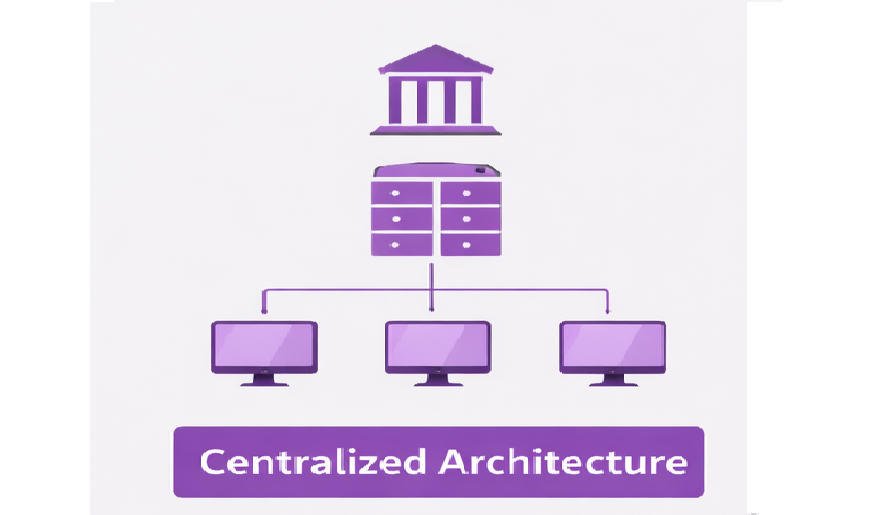
Centralized architecture में सभी applications और data एक central location पर hosted होते हैं। सभी departments उसी central system को access करते हैं। इससे control और monitoring आसान हो जाती है।
हालांकि centralized architecture में dependency ज्यादा होती है। अगर central system fail हो जाए तो पूरा system प्रभावित हो सकता है।
Distributed Architecture
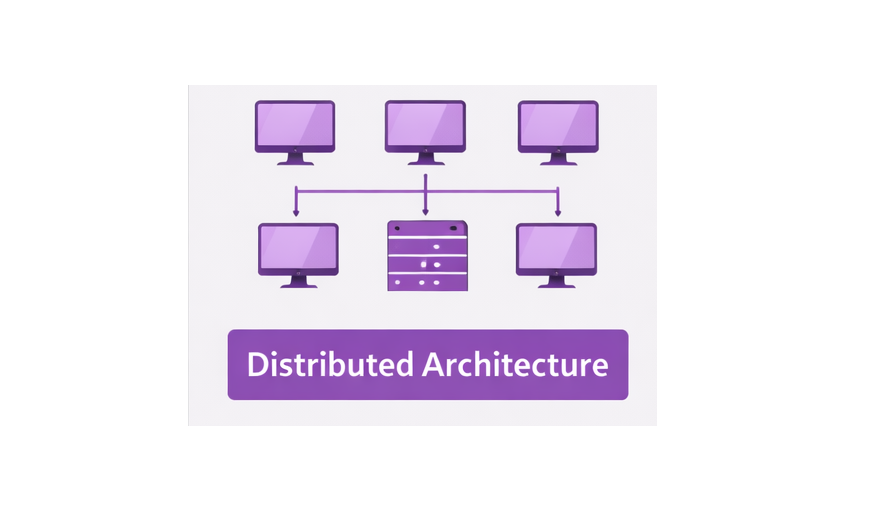
Distributed architecture में applications और data अलग-अलग locations पर distributed होते हैं। हर department का अपना system हो सकता है, जो network के through connected रहता है।
यह architecture ज्यादा scalable होती है लेकिन management complex हो जाता है।
Hybrid Architecture
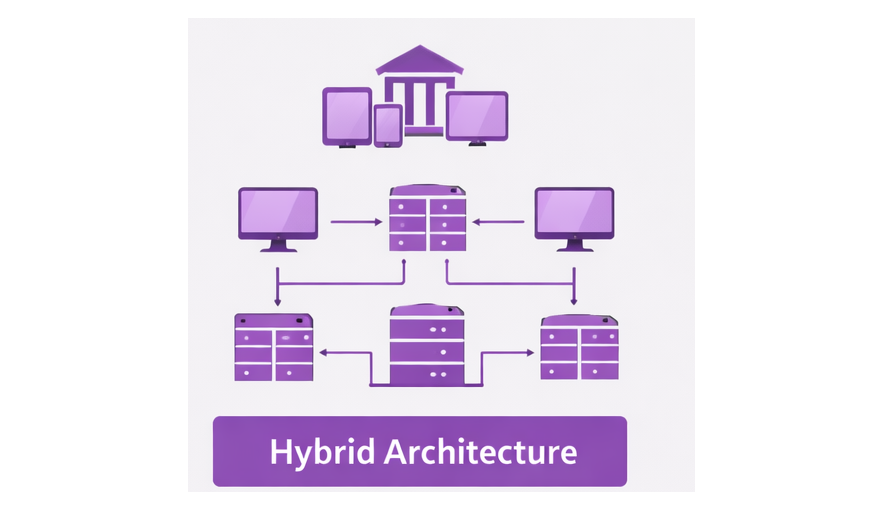
Hybrid architecture centralized और distributed दोनों का combination होती है। Critical data central रहता है और department specific data distributed रहता है।
आज के समय में ज्यादातर e-Governance systems hybrid architecture follow करते हैं।
Security in e-Governance Architecture
Security e-Governance architecture का सबसे sensitive part है। इसमें citizen की personal information और financial data शामिल होती है, इसलिए strong security measures जरूरी होते हैं।
Security architecture multi-layered होती है ताकि system को cyber attacks से बचाया जा सके।
- User Authentication
- Data Encryption
- Access Control
- Audit Logs
Components of e-Governance Architecture in Hindi
e-Governance आर्किटेक्चर में मुख्य रूप से निम्नलिखित घटक होते हैं:
- Government Services: ये सेवाएं नागरिकों के लिए डिजिटली उपलब्ध कराई जाती हैं जैसे कि सरकारी योजनाओं की जानकारी, ऑनलाइन आवेदन आदि।
- Data and Information Management: सभी डेटा और जानकारी का संग्रहण और प्रबंधन, जो e-Governance सिस्टम में उपयोग होती है।
- Communication Networks: इन नेटवर्क्स के माध्यम से सरकारी सेवाएं नागरिकों तक पहुँचाई जाती हैं।
- Technology Infrastructure: इसमें सभी तकनीकी उपकरण जैसे सर्वर, सॉफ़्टवेयर और हार्डवेयर आते हैं, जो सिस्टम को चलाने में मदद करते हैं।
Design and Framework of e-Governance Architecture in Hindi
Designing e-Governance Architecture in hindi
e-Governance का डिज़ाइन प्रभावी होने के लिए सरल, उपयोगकर्ता-मैत्रीपूर्ण और सुरक्षित होना चाहिए। इसमें नागरिकों की आवश्यकताओं के अनुसार सेवाओं को डिज़ाइन किया जाता है और यह सुनिश्चित किया जाता है कि सेवाएं सुलभ, पारदर्शी और सुरक्षित हैं। डिज़ाइन करते समय निम्नलिखित बातों का ध्यान रखा जाता है:
- Usability: इसे नागरिकों के लिए सरल और उपयोग में आसान होना चाहिए।
- Scalability: डिज़ाइन को इस तरह से किया जाता है कि भविष्य में बढ़ती मांग को भी पूरा किया जा सके।
- Security: डिज़ाइन में डेटा और व्यक्तिगत जानकारी की सुरक्षा सुनिश्चित की जाती है।
- Integration: डिज़ाइन में विभिन्न सरकारी विभागों और सिस्टमों के बीच समन्वय सुनिश्चित किया जाता है।
Framework of e-Governance in hindi
e-Governance के फ्रेमवर्क में तकनीकी, कानूनी और सामाजिक पहलुओं का ध्यान रखा जाता है ताकि यह प्रभावी रूप से कार्य कर सके। फ्रेमवर्क में निम्नलिखित घटक शामिल होते हैं:
- Legal Framework: इसमें वह कानूनी ढांचा शामिल होता है जो सरकार के द्वारा प्रदान की जाने वाली सेवाओं को विनियमित करता है।
- Institutional Framework: यह सरकारी संस्थाओं के बीच सहयोग और समन्वय सुनिश्चित करता है।
- Technological Framework: इसमें वे सभी तकनीकी उपकरण और प्लेटफार्म होते हैं, जो e-Governance सिस्टम को संचालित करते हैं।
Challenges in Designing e-Governance Framework
e-Governance का डिज़ाइन करते समय कई चुनौतियाँ आती हैं। इनमें प्रमुख चुनौतियाँ हैं:
- Digital Divide: सभी नागरिकों को समान रूप से डिजिटल सेवाएं प्रदान करना मुश्किल हो सकता है।
- Data Privacy and Security: नागरिकों का डेटा सुरक्षित रखना और उसकी गोपनीयता बनाए रखना एक बड़ा मुद्दा है।
- Infrastructure Limitations: कुछ क्षेत्रों में तकनीकी अवसंरचना की कमी हो सकती है, जो e-Governance को प्रभावित करती है।
FAQs
What is e-Governance in hindi? (e-Governance क्या है?)
e-Governance refers to the use of digital tools and technology to provide government services to citizens. It aims to make governance more efficient, transparent, and accessible through digital platforms.
What are the components of e-Governance architecture in hindi? (e-Governance आर्किटेक्चर के घटक कौन से हैं?)
e-Governance architecture consists of key components such as Government Services, Data and Information Management, Communication Networks, and Technology Infrastructure. These components work together to deliver digital government services effectively.
What is the role of technology in e-Governance in hindi? (e-Governance में प्रौद्योगिकी की भूमिका क्या है?)
Technology plays a crucial role in e-Governance by enabling the digital delivery of services, facilitating data management, and ensuring communication between government departments and citizens. Technologies like E Governance, AI, and Mobile Technologies are widely used in e-Governance.
What are the key layers of e-Governance architecture in hindi? (e-Governance आर्किटेक्चर की मुख्य परतें कौन सी हैं?)
The key layers of e-Governance architecture include the Service Delivery Layer, Application Layer, Data Layer, and Integration Layer. These layers work together to ensure the smooth delivery of government services to citizens.
What challenges exist in implementing e-Governance in hindi? (e-Governance को लागू करने में कौन सी चुनौतियाँ हैं?)
Some of the key challenges in implementing e-Governance include the digital divide, data privacy and security concerns, and infrastructure limitations in certain regions. Overcoming these challenges is crucial for the successful implementation of e-Governance systems.
What is the importance of the design and framework of e-Governance in hindi? (e-Governance के डिज़ाइन और फ्रेमवर्क का महत्व क्या है?)
The design and framework of e-Governance ensure that the system is user-friendly, scalable, and secure. A well-designed framework helps in effective service delivery, seamless integration between government departments, and ensures that citizens' data is protected.